Road Trip Activities for a 3-Year-Old: 7 Car Games and a Break Plan
A long car ride with a three-year-old works better when you can switch between talking, looking out and stopping to stretch. These seven low-prep activities keep the driver focused on driving and save screen play for a parked break.
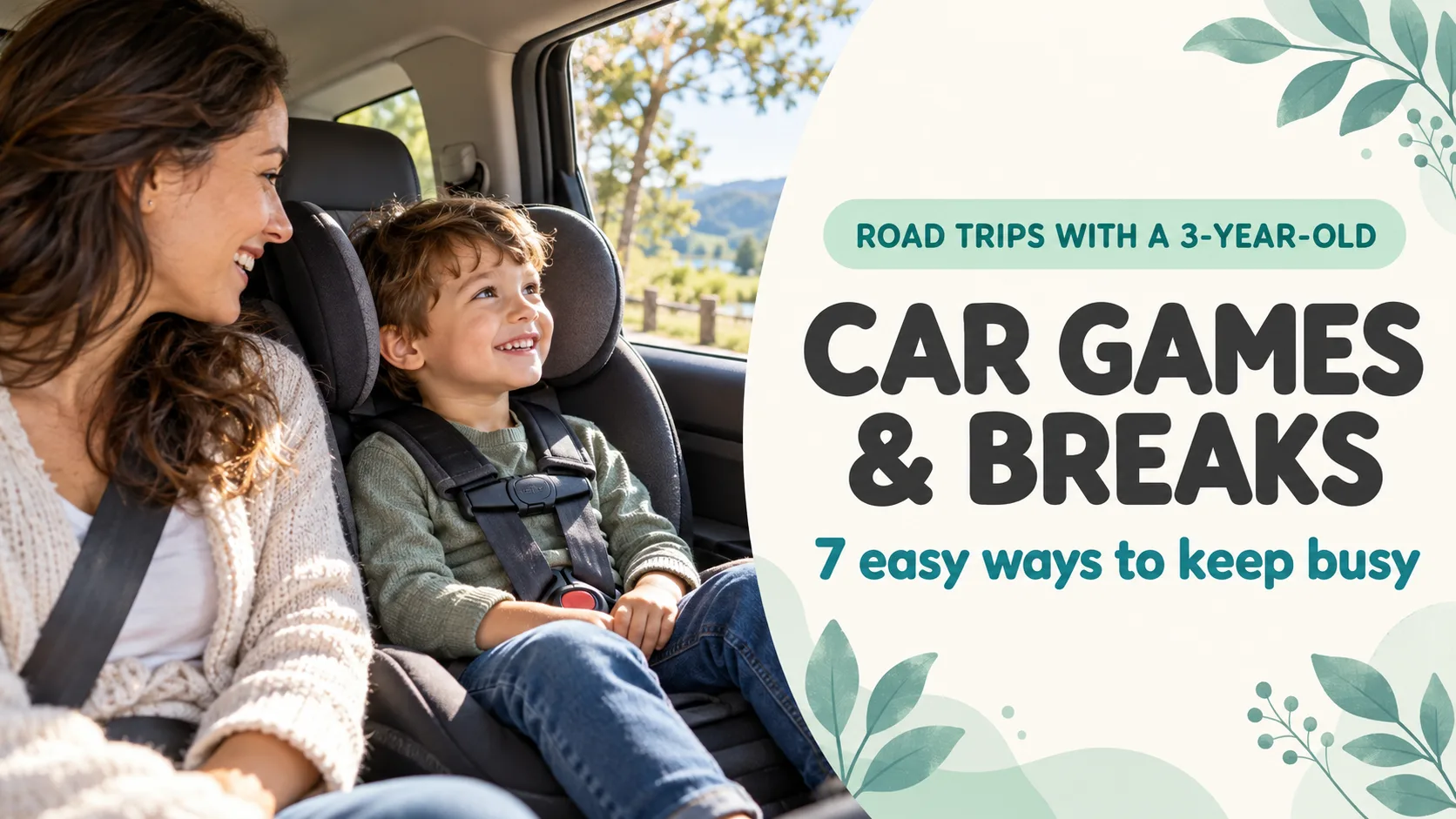
Published and information checked: . Written by 39Kids, the developer of PhotoPuzzle. Follow the current child-restraint rules where you drive and check app stores before installing. The cover is an AI-generated scene, not an app screenshot.
While moving: voices and the view. While parked: a break and, if wanted, one photo game. You can change the plan when your child is tired without relying on continuous screen time.
This article is specifically about a long trip by car with a three-year-old. A train allows different movement and supervision, so our train travel guide is separate.
First rule: buckle up correctly and keep the driver out of the game
Use a correctly installed child restraint suited to your child’s age and size, following the law where you drive. The U.S. National Highway Traffic Safety Administration advises age- and size-appropriate car seats or belts for every trip. Its distracted-driving guidance also makes clear that the driver’s attention belongs on the road.
- Driver: Do not operate a game, look back at a screen or retrieve dropped toys.
- Another adult, if present: Lead the conversation and help with activities.
- Child: Stay properly buckled; choose games that do not require reaching or twisting.
If you are the only adult, a short song or one easy question is enough. A child who needs more help is a reason to find a safe place to stop, not to multitask behind the wheel.
Before leaving, choose two voice games and possible stops
Pick two games that need no loose pieces, such as a favorite song and a color hunt. Check where you could stop along the route. Ask your child what they would like to do at the next break, but keep the plan flexible around toilet needs, tiredness and road conditions.
| Stage | Prepare | Why |
|---|---|---|
| Before departure | Check the child restraint and how your child feels | Comfort and safety come first |
| While moving | One song, word game or window question at a time | No close-up screen or game setup needed |
| At a stop | Toilet, water and a chance to move first | Rest is more important than another activity |
Do not turn the drive into a contest to see how long your child can stay in the seat without a break. A flexible route leaves room for an earlier stop.
Seven road-trip activities for a three-year-old
1. Find one color outside
Ask your child to name one green thing they can see from their seat. A tree or building is enough. Avoid rapid “look left!” challenges that make them twist around.
2. Sing one verse, then pass the lead
Choose a familiar song and sing just one verse. If another adult is riding with you, trade lines. A child who wants to listen rather than sing still counts as taking part.
3. Guess an animal sound
Make one animal sound and let your child name the animal. Then invite the child to make the sound. This is short, seated and needs no props.
4. Ask a “which one?” question
“Would you choose a strawberry or a banana?” has no wrong answer. Ask for one reason if your child wants to talk. Another passenger should lead rather than pulling the driver into a long conversation.
5. Recall one thing from the last stop
“What did we see when we stopped?” might bring up a big tree or a funny sign. If your child does not remember, simply tell your own short story. It is not a memory test.
6. Choose one thing to do at the next break
Offer two real options, such as a drink or a short walk. Adults still decide necessary toilet and safety steps. Giving the child a small choice can make the next stop feel concrete.
7. At a parked stop, try a four-piece family-photo puzzle
After toilet and water breaks, open PhotoPuzzle only if your child still wants to play. Use a photo already stored on the device and start with four pieces. The driver can set it up once parked, then close the screen before driving again. See the how-to guide for photo selection before your trip.
A flexible rhythm: ride, stop, then ride again
Begin with one color question. Later, offer a song or animal sound. If your child seems uncomfortable, plan a safe stop rather than adding games. At the stop, use the toilet, drink and move around before considering a photo game.
On the next leg, ask whether your child wants another window game or quiet time. You do not need to entertain them every minute. A nap or calm silence may be the better option.
For motion sickness, stop close-up activities
The NHS motion-sickness guidance recommends avoiding reading and electronic devices if they worsen symptoms, distracting children with talking or songs and breaking up long journeys. That is why this guide keeps photo puzzles at parked stops rather than making them the default moving-car activity.
If your child becomes pale or nauseated, stop somewhere safe and take a break. Ask a health professional or pharmacist about ongoing symptoms or medicine appropriate for your child. Do not move a child out of their restraint while the vehicle is in motion.
Road trips with a three-year-old: frequently asked questions
Can my child use a phone puzzle in a moving car?
For a child prone to motion sickness, avoid screens while moving. Even if screens do not bother your child, never ask the driver to set one up or let a child twist out of the restraint to see it. This guide saves photo puzzles for a parked rest stop.
What if I am the only adult driving?
You do not need to become the game leader. Pick a song or a simple window question your child can answer without your constant attention. If the child needs more than that, stop at a safe place before helping.
How often should a three-year-old take a break?
There is no single interval in this guide. Plan places where you could stop and respond to your child’s needs, the weather and the road. A safe stop matters more than following a strict clock.
What should we do if our child feels carsick?
Stop screen or close-up activities. Try a calm voice or song, and pull over safely for fresh air, water and a break. Ask a health professional or pharmacist about persistent symptoms or medication that is suitable for your child.
Will a photo puzzle work without service?
The PhotoPuzzle store listing says it works offline with included images or photos already stored on the device. A cloud-only photo may need a connection to download, so test selecting and playing with the chosen picture before leaving home.
Takeaway: voices on the road, screens only when parked
Keep the child buckled correctly and the driver focused. Try one simple voice or window game, then take a break when needed. A four-piece photo puzzle can be a short option at a parked stop, but rest comes first.

PhotoPuzzle
At a parked break, turn a photo already on your device into a four-piece puzzle. Free on iPhone, iPad and Android.